
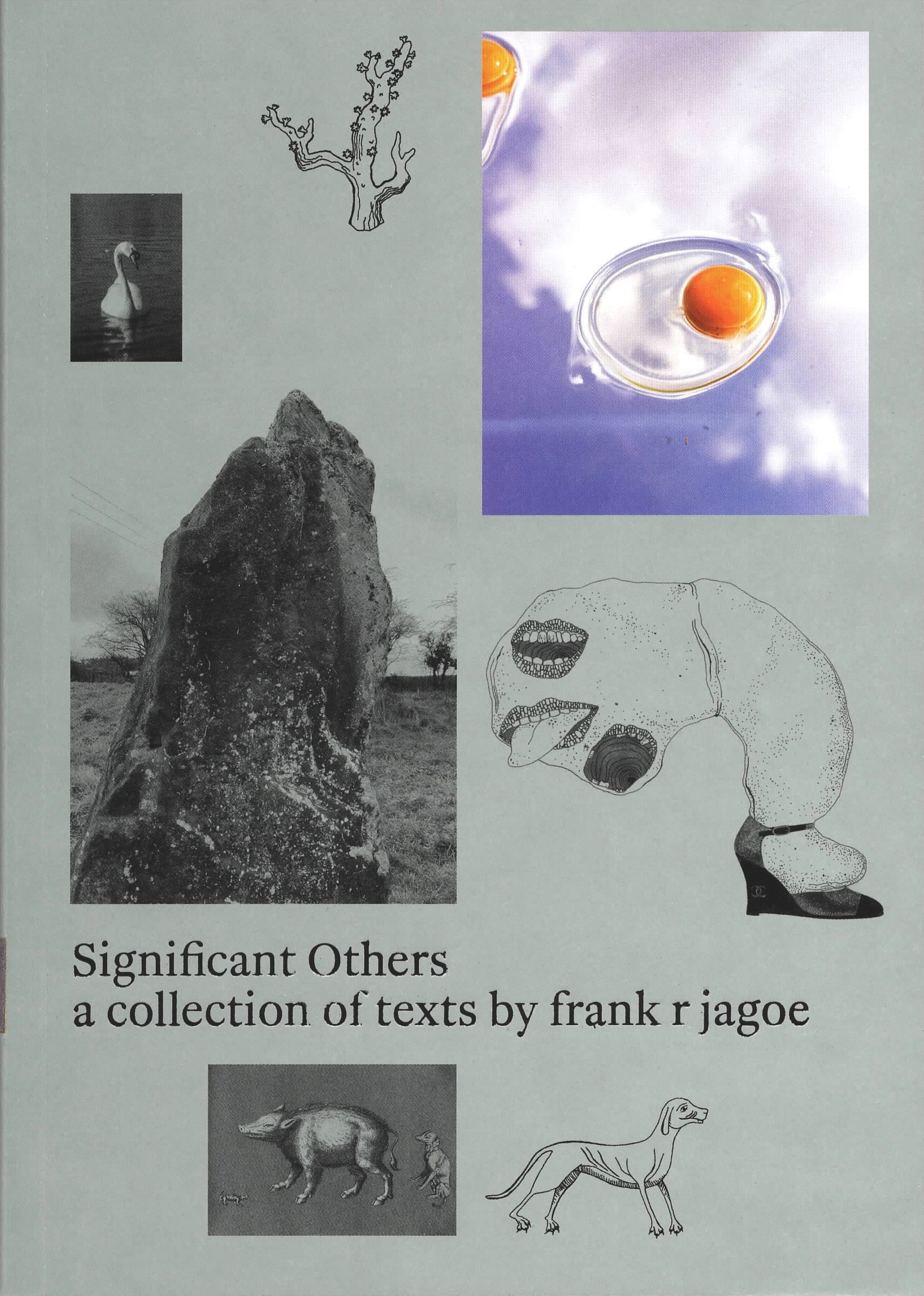
Literature Editor CSENGE GY reads the 2024 Prototype Prize winner Significant Others by frank r jagoe.
Significant Others is a collection of twenty-one texts. Flowing between form, genre, and perspective, only one thing remains constant, guiding us through: desire. Jagoe blends history, politics, and geology with fiction. It is candid to the bone, right through all the repulsive mucus of existence.
Desire appears and reappears, continually remoulding itself. Stones, pebbles, rocks similarly materialize throughout the collection, emerging in the bowel, the brain, and the natural world. They accompany, press in, push out; they love, hate.
In clinging love, jagoe muses on the detachments that govern urban life. The narrator attempts to reattach their detachments – both from others and from nature – through a tactile encounter with a limestone cliff. Atop this natural formation, language becomes erotic, and communication becomes penetration.
“The stones are alive, and they are speaking to you, if you would only stop to listen.”
The tactile frees the narrator’s mind from the need to process and interpret. Beauty and value emerge from pain, from its ability to weave individuals into the spiderweb of collective existence. A medieval depiction of Christ’s side wound illuminates the final page of the text, epitomising admired and eroticised pain, and the love and longing is embedded in suffering.
Desire runs bold. It is erotic, bodily but it is also intellectual: a need to understand and be understood. Jagoe intertwines their own writing with quotations from other authors, in an attempt to fulfill this desire. The narrator runs their fingers along the ridges of the cliff, in an attempt to fulfill their desire. Everything is mirrored, circling. All dead things lie compressed within the layers of the limestone. Desire is deadly, but nothing ever truly dies. It is painful and fearful – but so is love. And again, pain is value.
“Love is a way of saying I matter, and I am in community, I belong.”
It is interaction with natural matter that unlocks this understanding. Stones are “a rich text to be read, an archive of deep time”, awaiting the pressing of the fingertip. Jagoe’s depiction of city and nature, like their depiction of pain and love, resists reduction or binaries. The city isn’t evil. Nature exists within it. “Language is everywhere”, and so is nature – as long as we remain feeling beings, refusing numbness, refusing to forget.
A Prescription from the Physicians of Myddfai consists of numbered diary entries in which the narrator tracks their progress dealing with the physical consequences of submitting to their desire to eat a tomato. In grim detail, their bodily movements are traced and pain meticulously itemised.
True Love takes the form of a dialogue between a human and a swan. Desire swells to the point of complete consumption and self-sacrifice. The swan longs to drown in the “hot soup” of the human’s “skin and dirt”.
Letters to Arm comprises fourteen love letters addressed to a disembodied arm. The writer seeks to physically consume Arm, but it remains indigestible. The letters swell with obsessive desire, straining towards a breaking point. By upending and reclaiming the love letter form for such unconventional purposes, jagoe questions the possibility of love without total absorption and unification, and interrogates the places desire will take us.
Mirror Mirror depicts the narrator’s attempts at consummating their erotic desires for their bathroom mirror. The mirror appears both as a literal object, and as a surface, reflecting the narrator back to themselves . Its reflective quality draws the narrator’s desires into a mesh of outward and inward. Looking at the object of desire and looking at the self are fused into a singular act of erotic scopophilia. Soon, however, looking is no longer enough, and the narrator craves total union, attempted through the wounding of the side. Desire, again, coaxes self-destruction.
“I do not see this as mutual infection so much as mutual absorption.”
Limestone concludes the collection, recalling the themes of circular existence and oneness through which jagoe has travelled, with the reader as their passenger. The most structurally fragmented work of the collection, it presents disconnected images across broken lines. A nondescript figure, “it”, fades in and out of view. The image of a “Wallpaper with / the pattern of / horses / on it” colours our “comforting / descent / to / the / sea / bed”. The being chews on limestone, recalling the other beings within it whilst simultaneously becoming stone itself. Desire, finally, is wistful and absorbing.
”Emotions are eternal / collective, and / deeply material. It / licks the walls / of the cave / and / turns / them / into / stone.”
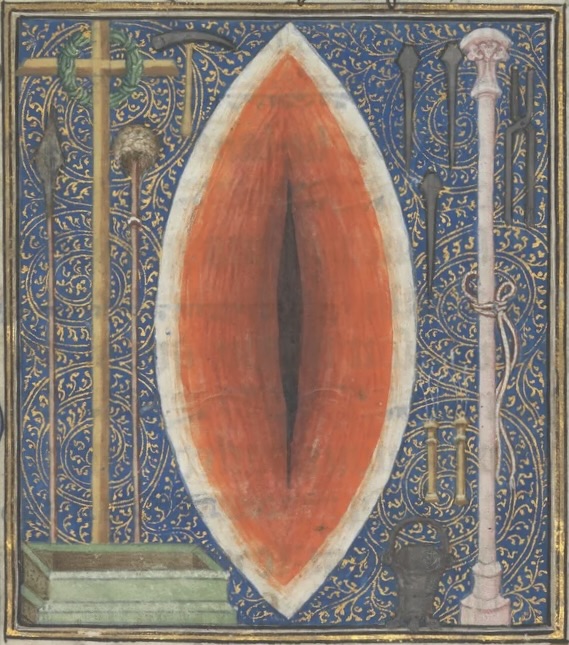
Christ’s side wound, the same depiction that appears at the end of clinging love, is reproduced at the bottom of the book’s spine. Handling the book, – turning its pages, bending its spine – makes a tactile relationship with the wound is unavoidable. The image entombs a complex and winding history. The cult of devotion to the image developed in the Middle Ages, and writings from the period encouraged a highly tactile relationship with it. Touching, sucking, rubbing, entering the wound were commonplace, both fictionally and with physical depictions of it. Multiple depictions exist that have worn away from such a relationship. It visually surmises jagoe’s thematic study throughout Significant Others, the object disrobing its physical manifestation to reveal reciprocal (erotic) desire.
Penetration appears throughout the collection in various forms: consumption, touch, communication. The boundaries between humans and nature, objects are blurred to a point teetering on absolute obscurity. The non-human is no longer a substance to be utilised, but an agent of want and possessor of messages, waiting to be decoded.
Significant Others won the book-length category of the 2024 Prototype Prize, attaining publication by the press, and was subsequently published in November 2025.
Cover image courtesy of Prototype Publishing.