
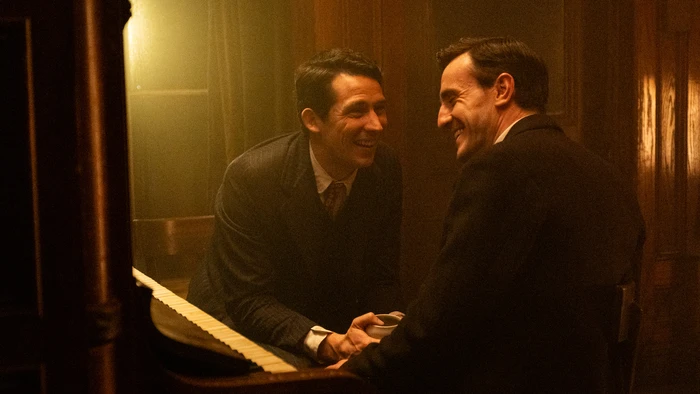
Film Sub-Editor ISABELLE BRISTOW reviews Oliver Hermanus’s interpretation of The History of Sound (2025).
How crucial is the world of sound? This is a question that has been proposed again and again by the film industry, and is perhaps finally done justice by Oliver Hermanus’ latest interpretation of The History of Sound. A highly emotional and strikingly visual film, Sound offers a period-piece romance that does not disappoint for fans of Paul Mescal and Josh O’Connor. Premiering at the 78th Cannes Film Festival on the 21st of May 2025, and released in local London cinemas on the 23rd of January, Sound comes to viewers just in time for both Valentine’s and LGBTQ+ History Month.
Based on the collection of short stories by Ben Shattuck, famed author of Six Walks (2022), the film adapts the 2024 publication into a heartrending display of memory and loss. The central sound is folk music, but further auditory aspects are interspersed over the picture’s course to weave a stunning tapestry of musical features. Hermanus’ directorial approach hones in on the instantaneous connection between two distinctly different students at Boston Conservatory during the onset of the Great War. David, played by Josh O’Connor, and Paul Mescal’s depiction of Lionel develop a unique relationship that is reliant upon the spontaneity of music. Hiking through rugged winter terrain, they travel through Maine for the better part of the film with the purpose of immortalising songs on a wax-lined recording system — anticipating the home vinyl setup many of us enjoy today.
Born with the synesthesia gene, Lionel announces early on in the film how it “never occurred to me that music was only sound”. Rather, its immediate effects allow him to envision colour and even taste. Billie Eilish is among the few practising artists today who experience different sensorial effects when encountering sounds. With synesthesia being experienced by at least four per cent of people on Earth (Cleveland Clinic, 2023), Mescal’s artistic interpretations of sound are striking.
David and Lionel’s histories of sound remain a private, intimate vocal record of emotion that reverberates throughout the film. Whilst occasionally lapsing into more rushed and unexplored aspects of their relationship, Hermanus artfully incorporates everyday props to illustrate the depths of their shared emotion. One scene illustrates this the most, with David collecting the strewn feathers from his lover’s torn pillow and quietly tucking them back into the blue and white striped case. Nuances like these add to the emotional impact of the film. They contrast against the otherwise sound-centric underpinnings that accompany the actors. It is the rare instances of the production lapsing into silence that introduce the most moving scenes. Mescal delivers one of the more strikingly sensitive moments of his career by taking centre stage and sobbing quietly after learning of his lover’s suicide. He transforms himself into a spectacled choir-boy whose life is entirely consumed by the qualities of sound until a chance encounter with Lionel at the keys of a pub’s piano, achieving a tear-jerking performance that is distinctly separate from his act of Lucius in Gladiator II (2024).
Ending with most of the audience in tears, Sound addresses crucial points of identity and difference by using auditory backdrops to reaffirm the emotional tensions navigated by both David and Lionel. The recurring use of sound accompanies Lionel’s emotional ordeals, transforming loss into a persistent, haunting presence. Where Lionel’s world is entirely informed by sound, O’Connor’s character, not being able to express the traumatic impacts of the Great War, is stark in comparison. Rather, he records the sounds of others. David’s voice is diminished further, only to be rediscovered in the final scene of the film.
A deeply moving romance that stretches across global landmarks, including Italy and London, Sound is a must-watch modern classic. Incorporating unique filming panoramas and interesting soundscapes, Hermanus prompts the viewer to imagine the many vibrant colours of music. It is a journey of sound, one that both unites individuals and observes the reverberating qualities of loss.
Photo by MUBI