
Features Editor RORY PATRICK on bell hooks, Australian nonchalance, and men’s mental health.
A few years ago, I was at a prestigious American liberal arts college in a class on “queering theatrical histories”. Mentally, I was at one of the lowest points in my life, and not just because I was in a class called “queering theatrical histories” (though that probably didn’t help). So my memory is hazy. But what stuck with me was a lesson on bell hook’s “love ethic,” delivered during a class on men’s mental health. hooks’ idea was transferred to me through the academic avatar of a balding, 30-something-year-old blonde man with an undercut and a leather Swiss watch that garishly contrasted his Marxist affiliations.
One of my classmates described the professor in question as a “Fabergé egg on stilts.” This insult was both so accurate and so malevolent that I could only admire her mind. The irony was not lost on me: mocking the teacher of a suicide prevention class. She ended up dropping out of the school just one semester before I did, so maybe in some way we were actually very similar. I don’t think that’s necessarily a good thing; but at least I can blame all of our wrongdoings on youth.
I never bought bell hooks’ “love ethic”, the one sentimentally formed in All About Love. I think the reason for this is two-fold: I’m Australian and I’m a man. I was 19 and already jaded, sitting in that grey classroom with a thick moustache and an even thicker Sydney accent (now lost somewhere across the Atlantic). The idea that care and meaningful attentiveness—i.e. love—should morally guide us sounded right but felt implausible. It was an idea, not a reality. An “ethic,” not an “ending.” It gave me that warm, sanguine feeling of alignment with the world that happens when you finish a great TV show, which is to say it was a kind of fiction that, like a mirage, briefly altered my outlook before reminding me where I actually was.
But most importantly, the idea felt un-male. I had lost two friends from home to suicide that year, both men. I knew they would gag if they heard what I was hearing now. They’d kill themselves again just to prove a point. Quixotic notions of “love”—that easy-to-say but difficult-to-do abstraction—seemed stupid.
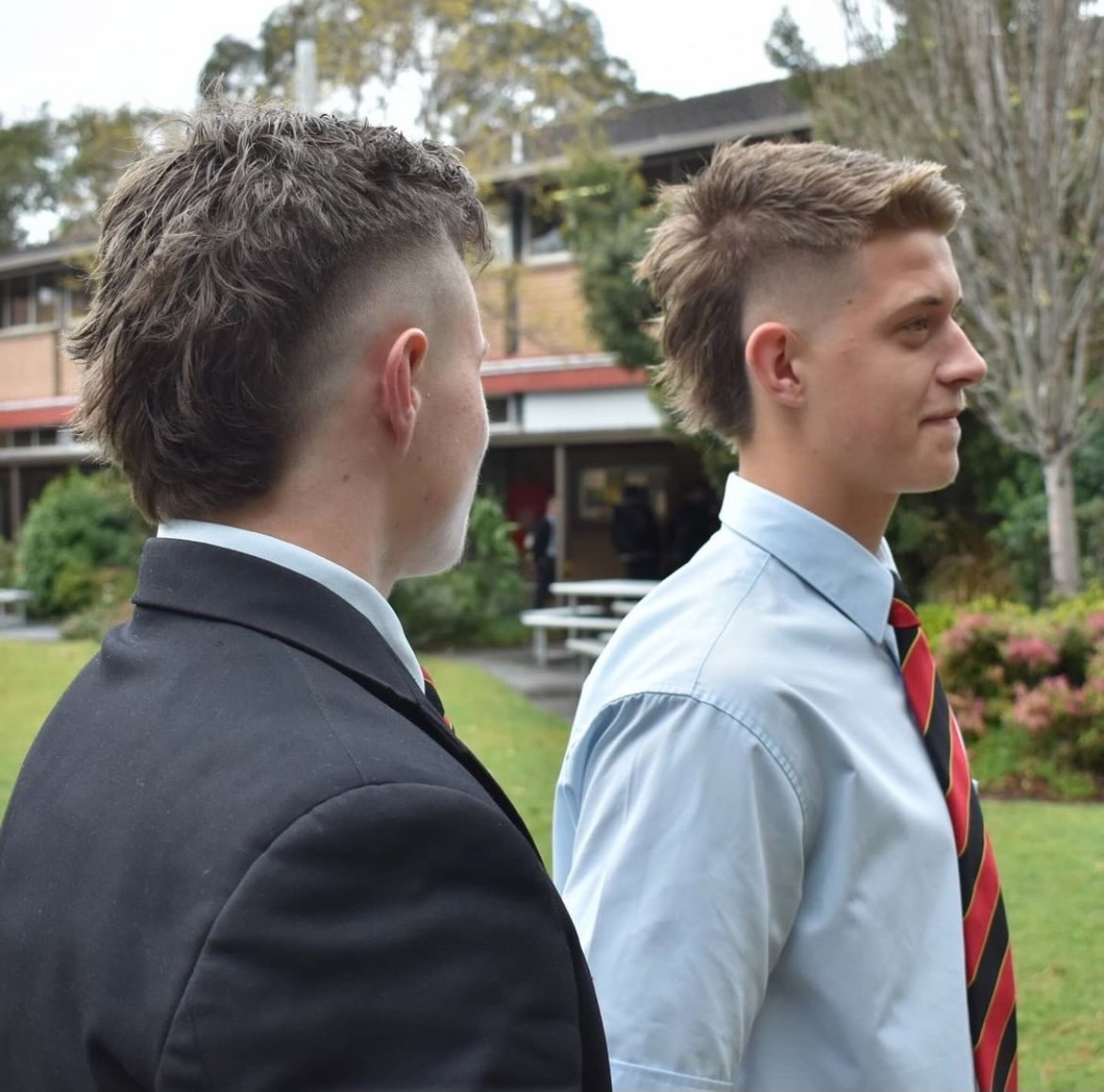
This is because we operate by a “truth ethic” where I’m from in Sydney, a masculine countermand to hooks’ love model. Although I completely understand the inclination to laugh at how seriously I take my Australian identity, my maleness is intertwined with my patriotism. Most people conceive of Aussies in shallow and trivial ways: mulleted hicks with weirdly perfect teeth and politically incorrect points of view. This isn’t inaccurate, but it merely scratches the surface of a richer subterranean charm.
Sydney is blunt and uncouth, for better and (definitely) for worse. It contrasts London, which operates within a framework of condescension, moral signalling, ex parte gossiping, and patronising magnanimity. Also classism. The concept of “classism”—if it can even be labelled that in a country founded by teenage bread-thieving convicts—is complicated in Australia because no one has “class”, at least not in the way modern England does, forever clinging to its remnants of medieval hierarchy. Our country’s too young, and our people too crass. A suburban Sydney mum might attempt to perform a classist affect with a matte black Range Rover and gauche Louis Vuitton neverfull, but she will remain a gross imitation of the Chelsea socialite she doesn’t even realise she is copying.
Regardless, I am as Australian as the London winter is long. Just ignore my Berlinophilia and vaguely queer central-European mannerisms.
I grew up in an all-boys Catholic school on the outskirts of Sydney, but the real religion was rugby. Catty wit and subtextual shade did not exist. It was survival of the literal fittest, with the bar raised dizzyingly high. All of those hormones in that Queensland grass-fed beef meant that everyone in my school was 6 foot and 80 kilos of muscle by the time they hit 16 (national moustache to match).
This is to say hooks’ feminine notions of care were absent in my adolescent sandbox of fraternity. But something realer was present. Masculine camaraderie, this surprisingly tender attention to one another—what hooks would call “love”—was palpable. Boys hugged. They wrestled and tussled (the Spartan hug). They gave each other $5 skin-fade haircuts in the bathroom next to the janitor’s closet and laughed when they got caught. It was not a verbal love, but an unspoken one—care unmuddied by the subtexts of language. Everything was pure, and no one I knew was dead.
The reason the casual Australian sensibility matters to me is because it makes you feel like nothing is ever the end of the world. There’s nothing five to seven schooners can’t fix. I tell my mates how I feel, albeit interlocked with a self-effacing sequence of “yeah nah,” and they tell me how they feel. This was microcosmic but real; and what is someone’s life if not a series of events that most people are not privy to?
I think of the Aussie boys I grew up with, how easily life unfolded before them, with bronze bodies and gleaming, white-teeth grins. Their “love ethic” wasn’t convoluted, stuttering over itself in self-aware anxiety; it was a simple practice of care. It didn’t need explaining. They knew, far removed from the intertangled complications of a labyrinthian European metropolis, that it wasn’t what you said that mattered—it was what you did that counts.
My friends used to call me a “dumb c**t” and slap me on the shoulder. Their Adam’s apples bobbed up and down with throaty boyish snickering. It smelled like eucalyptus everywhere and I never really worried. This, to me, was love.